Well, folks, after much soul searching (and bugging of friends, relatives, and total strangers), I am happy to announce the working title of Theda Krakow mystery #4: PROBABLE CLAWS.
This title, suggested independently by both Phil Mann and Rob Chalfen though what became an avalanche of emails (and a lot of fun) has narrowly beaten out THE SOUND AND THE FURRY, HISS OF DEATH, and BRIGHT LIGHTS, BIG KITTY. All of which make me smile.
Of course, titles are really up to my publisher, but I'm going to lobby for PROBABLE CLAWS. And at least I have something to put on my ongoing work-in-progress besides "Theda4."
If all goes according to plan, look for the new Theda in early spring, '09. And now, back to work.
Wednesday, January 30, 2008

Tuesday, January 29, 2008
Blogging for Patry
Last summer, I was invited to participate in a very fun event, down on the edge of Cape Cod in Falmouth. Called "Death and Dessert," it brought a few of us authors together with a lovely crowd ... and lots of really great sweets! While I tried to avert my eyes from the frosted brownies, I found myself chatting with my fellow panelists. David Hosp, a sweet, funny guy, I'd met before. He writes legal thrillers, which makes sense, because he's a lawyer. Paul Kemprecos I'd never met before, but he was who I hope to be at some point - wise, wry, self-effacing, and just lovely. The fourth panelist was a local woman I couldn't believe I hadn't met in person before, Patry Francis. Patry and I knew each other from the online community Readerville, so I knew she was the author of a debut novel, The Liar's Diary, which sounded marvelous. But even she expressed some surprise to find herself in our midst. Not that "The Liar's Diary" doesn't have suspense, but it's more than a thriller, more than a family story. More poetic and yet readable.
Today, "The Liar's Diary" comes out in paperback. Patry is recovering from cancer and around the country (maybe around the world), people are blogging for her. So take a look at Patry Francis's "The Liar's Diary" today, or at least check out this trailer. You'll be glad you did!
Today, "The Liar's Diary" comes out in paperback. Patry is recovering from cancer and around the country (maybe around the world), people are blogging for her. So take a look at Patry Francis's "The Liar's Diary" today, or at least check out this trailer. You'll be glad you did!
Friday, January 25, 2008
The fumes made me do it
"A prize-winning novelist has won a settlement of more than £100,000 after she claimed to have become so intoxicated by fumes from a nearby shoe factory that she was reduced to writing thrillers."
Thanks to Sarah Weinman for posting the complete article over at her Confessions of an Idiosyncratic Mind crime fiction blog.
Thanks to Sarah Weinman for posting the complete article over at her Confessions of an Idiosyncratic Mind crime fiction blog.
Thursday, January 24, 2008
Cats & puns & rock & roll?

Hi, my name is Clea and I need help.
I am addicted to puns and literary references. It probably started back when my father first handed me a wooden quarter-sized disc with the letters TUIT on it. "Have you ever said you'll do something when you can get a round to it? Now you have one!" He'd smile at this point and point out the obvious: "It's a Round Tuit!" Maybe it's genetic.
The condition continued with my last nonfiction book, "The Feline Mystique," a play on "The Feminine Mystique." And I've certainly indulged it with my mysteries: "Mew is for Murder" plays (or is supposed to play) on both "Murder in the Mews" and "M is for Murder." "Cattery Row," which does in fact deal with catteries, on "Cannery Row," and my new "Cries and Whiskers" on Bergman's great "Cries and Whispers."
But, you see, now I'm having problems. I'm deep into Theda #4, and I haven't yet come up with a good title. Something that immediately says both "cat" and "great work of art" (I'm being somewhat facetious here). If it also says "murder" or "mystery," so much the better. I've been playing with "Claws of Death," or some other claws/clause pun (I'm a former copy editor). But do you have any ideas? "Gimme Shelters"? "Whisker to a Scream"? (Sadly, "Whisker of Evil" has already been used.)
Come on, how much worse can yours be? If I use yours, I'll not only send you a signed book, I'll thank you in the acknowledgments of Theda #4, Title TBA.
Friday, January 18, 2008
Hear ye, hear ye!
Cries and Whiskers is an audio book! (Here it is on audible.com, also on Amazon as a CD-ROM, wonder if they'll send me one of those?) My copies of the Blackstone Audio eight-CD set (hey, it's unabridged) just arrived. I'm a little afraid to listen, lest reader Tavia Gilbert doesn't sound like Theda to me. But I am thrilled.
Thursday, January 17, 2008
Should this be in a family newspaper?

File under "heavy petting" (and "equal time" for this blog): I love this. If a dog can smile, Joan Lowell Smith's husky is smiling.
photo credit: Jim Pathe/The Star-Ledger
Tuesday, January 15, 2008
Steve Dale's PetCast

Columnist and WGN-AM (720) Chicago radio personality Steve Dale named "Cries and Whiskers" a "pick of the litter," and interviewed me for his Pet Central show. Here's the PetCast. (I'm up after "The Shelter Dog." Equal time?)
Monday, January 14, 2008
quickies...
I review "Night Train to Lisbon" for the Boston Globe. Didn't like it much.
But I was happy to see TNR mentioned in this story about feral cats in today's Globe.
But I was happy to see TNR mentioned in this story about feral cats in today's Globe.
Posting for Patry

Hi folks,
I'm a member of Backspace, , a fun and supportive writing site, of which Karen Dionne is the administrator. She sent this email around a few days ago, and I've signed up. So, you'll be hearing more from me on this on Jan. 29. But in case any of you out there are bloggers, I'm posting Karen's invite. We all write alone, doesn't mean we can't have a community!
all best,
Clea
Hi, all -
A Backspace member, Patry Francis, whose debut novel THE LIAR'S DIARY is due to come out in trade paper on January 29, was recently diagnosed with an aggressive form of cancer. She's had several surgeries and her prognosis is good, but since she's home recuperating, she won't be able to do anything with regard to promotion.
A few of her author friends are arranging a THE LIAR'S DIARY Blog Day for her on January 29, and the idea has REALLY taken off. In just one week, 120 authors have already agreed to blog about Patry's book on the 29th, including a couple with amazingly huge readerships, like Neil Gaiman and Jennifer Weiner, as well as a few who blog in conjunction with online magazines like Writers Digest and SMITH Magazine.
Most of the bloggers, though, are ordinary folks whose blogs haven't yet attained that reach, but still want to help. Susan Henderson is keeping the list on her website, LitPark. It's growing by the minute, and no wonder; Patry is a lovely person, who is dealing with her situation unsentimentally, and with courage and grace. (Read more here.)
We're asking folks who'd like to join this project to email me, so I can add them to the bloggers' list. Brilliance Audio is making a special clip available, and Circle of Seven Productions is putting together a short video, and I'll email these materials along with a press release from Patry's publisher and appropriate links to bloggers a few days before the event.
It's our hope that as the number of bloggers continues to grow, this event might expand beyond the Internet to radio and print. Individually, there's not a lot any one of us can do, but collectively, the impact will be significant!
If you could help spread the word by forwarding this email to those you think might want to get involved, or by blogging about her book on the 29th, that'd be great!
Thanks very much on Patry's behalf for your support and help -
All best,
Karen
Karen Dionne, Administrator, Backspace LLC
FREEZING POINT (coming October 2008 from Berkley) www.karendionne.net
Saturday, January 12, 2008
Guest blog: Brett Milano

Brett Milano has done a lot of things in his life, many of which have to do with rock and roll and some with cats. So when I saw this stellar review of his new book, The Sound of Our Town: A History of Boston Rock, I knew I had to ask him to blog.
Take it away, Brett!
In the 1920s, there existed an over-the-counter alcoholic tonic, beloved by certain blues artists, known as Hadacol. According to legend, that medical-sounding name came about because they hadda call it somethin’.
I kept a lot of the same logic in mind when I chose names for my cats…After a few days being able to settle on a name, you wind up punting because “Hey, cat!” isn’t working anymore. Being of a musical persuasion, I tend to name my cats after musicians. Though those names don’t always suit the character. During the ’80s I loved the Ramones, so it made sense that I named my cat—a big, floppy black Persian—after the bass player, Dee Dee. But it must be said that he bore no resemblance to the band’s scrawny, wired-up bassist. If anything, I heard often that he looked more like James Brown. There were times when he vocalized like him too, though his moves, bless his heart, were a whole lot clumsier. And he’d never wear a cape, no matter how many times you tried to drape it round him.
The dilemma turned up when I recently came to own a big, grand, silver Maine coon. Musical names in fact run in his family: His dad, the most prolific stud cat of his neighborhood, had earned the name Led Zeppelin—not just for the sexual connotation, but because he did resemble that silver blimp on the band’s album covers. My guy had been christened Mick, as in Jagger. While the name seemed appropriate swagger-wise, it didn’t sit well with either of us: the name doesn’t roll off the tongue (a good cat name should be at least two syllables), and seemed a bit generic—while my cat was anything but. Given my love for New Orleans music, I started going through the musicians’ names in search of an appropriate monicker.
Mac (as in Rebennack, a/k/a Dr. John) was an early contender, but had the same problem as Mick: Not enough resonance, though my cat does share some of the Doctor’s imposing character. Fess, as in Professor Longhair, was also briefly considered. Finally I went down the list of Neville Brothers. Art and Charles were too common to be good cat names. Aaron? Getting closer, though how can you give that name to a doesn’t like to meow? (This, I have to say, was strictly a phase: He now meows in three languages and sings gospel). So I went with the fourth brother, Cyril. Not only is it a fine-sounding name—the Cy sound is perfect for calling cats across the room—but it suits him; Cyril being the most fiery of the four Nevilles and the percussionist (my Cyril mainly plays percussion by knocking bottles off shelves). He began responding to the name almost immediately, emitting a little chirrup whenever he’s called, so it must be working. Besides, I hadda call him something.
Thursday, January 10, 2008
Library cats

It must be something in the air. I guest blogged over at Jungle Red today in praise of libraries. And then I heard that another blog was starting a "library cat" blog, the idea being to solicit library cat stories for an e-book celebrating National Library Week this spring, April 13-19. No pay, but a nice way for writers – even unknowns – to get a little exposure. I mean, cats... books... what's not to like? At any rate, when A Library Cat's owner, Marisa D'Vari and I chatted, she offered to write "a little something," which includes an interview with her own feline bibliophile, Apricat:
Love cats? Love mysteries?
My name is Apricat and I convinced my human to create a blog called A Library Cat, and on it, collect stories of all of us felines who love to hang out in libraries and read books.
Of course, we don’t really “read” … personally, I prefer to curl up on top of a good book and simply absorb what it has to say. Personally, I visit the New York Public Library on fifth avenue every day. I like to see the lions in front of the Library (a symbol of the cat kingdom, even though they are inferior creatures) and like to give motivational talks to the stray and street cats in the area. My human is forcing me to say that my favorite books are Building Buzz: How to Reach and Impress Your Target Audience, and Creating Characters: Let Them Whisper Their Secrets, [both by Marisa - ed.note] but I prefer to read about the way people worshipped cats in ancient Egypt. Clea Simon and Musetta have invited me to interview my human about why she created this blog.
Q: Marisa (I always call my human by her first name) why did you create A Library Cat?
A: National Library Week 2008 is celebrated (April 13-19). It was created by the American Library Association in 1958, and is a reminder for people to visit and support their local libraries.
Q: Why are you asking cats to submit their library reading experiences?
A: As you said, Apricat, Cats love to absorb information – you are a curious species! Just like you love to read my books at the New York Public Library, other cats around the United States like to read books their humans have written personally or enjoy reading. Some cats just like to read books about other cats.
Q: What are you doing with the stories?
A: People can write stories under 500 words (see guidelines below) and send them to me in an email at mailto:cat@alibrarycat.com I will post them on the web. Then, about a month before National Library week, I will turn the stories into an ebook and make them available for a free download. People will find out about the download via press releases I will write to call attention to the holiday and the Library cat ebook.
Q: Why would cats (or their humans) want to participate?
A: If the cat or human has a web site or book to promote, I include live links to Amazon or their web site. The links will be live in the ebook as well.
Here are the guidelines:
Marisa D’Vari is collecting fun stories of under 500 words about what books your cat would read if allowed to spend the day browsing at your local library. Stories must include the name and a descriptor of your local library, and the title of the book your cat would read. And hey, if the cat happens to read the book you wrote, so much the better. A link to Amazon or your web site will appear in the header (see example below) and the text. An ebook of the stories will be put into a ebook to help celebrate National Library Week 2008(April 13-19), a holiday created by the American Library Association, and available for a free download from A Library Cat site. I will send out the press releases to promote the ebook and web featuring your story/links closer to National Library Week. Here is a sample of how Cynthia Baxter, author of "The Reigning Cats & Dogs Mystery Series" (Bantam Books) submitted her story.
Questions? Contact cat@alibrarycat.com
Tuesday, January 8, 2008
Guest Blogger: Linda L. Richards
What’s in a name, anyway? This question came up for me again a few days ago, when Clea and I were making preparations for my visit here. At one point she said something like, “it’s a good thing the protagonist of your book is named Kitty, ‘cause she’ll feel right at home on my blog.”
And I laughed, of course, because it was funny and because Clea has the sort of witty energy that’s difficult to resist when she wants you to smile. But at the same time, I thought about what she’d said. Kitty. At this point, I’m having a tough time remembering where that even came from. And her last name: Pangborn? That I remember: I pulled it right out of the air. But I envisioned this young socialite thrust onto hard times. And she’s born a Katherine: Katherine right down to her matched luggage and her hand-stitched towels. And then the world changes -- the stock market crashes, her father kills himself, The Depression sweeps the country -- and she reluctantly emerges as “Kitty:” someone who puts up with a diminutive because she must. (Sorry, Clea: nothing at all to do with cats!)
Now here’s a secret, something I haven’t told anyone else. A secret about Dexter Theroux, the main male character in Death Was the Other Woman. No one has asked me why I settled him with “Dexter.” And it’s a pretty good question: one especially apt for this venue.
So why Dexter? Why not David or Michael or John -- one of those good old saint names that pull so much use. Was something more off-beat called for? Then Percival might have had the same effect. Or Archibald could have served. But the truth is this: at the very moment that the book that would become Death Was the Other Woman was pouring itself into my brain, I was dogsitting my friend Pam’s canine companion. And this dog was a rakish old gentleman: an Australian She pherd-cross-something-wirey. He had seen his share of summers, this old guy, his coat was thin in spots and his joints could be a bit sore in the morning, but there was something ineffably cool about him. You really got that, if he was a music lover, he’d listen to jazz. And not just any jazz, either. But the kind of cool jazz popularized by Miles Davis and Dave Brubeck. Something that calls for wearing a beret and a slouchy, stripey shirt.
We’d go for walks and he’d be very self-possessed. My own dog, Jett, would be bouncing around, trying to get him to play, and he would play with her, a little indulgently. But there was never any question but that he was thinking his own thoughts and preparing to do his own business. He was courteous to Jett, you understand -- even if that courtesy was sometimes tinged with an aloof superiority that he came by very honestly -- but it was clear that he was focusing on larger issues. And this dog -- of course, and you’ve guessed it by now -- this dog was named Dex.
So, I don’t know, I’m sitting in my studio writing away and Dex has taken up residence somewhere near my feet. (His mom is a writer, so I guess it made sense to him to station himself near the woman making all the sharp clacking sounds on the keyed plastic thing.)
While he’s there, snoring softly, this character waltzes into my manuscript. I recognized him as soon as he walked in. He is tall and good-looking in a 1930s movie star kind of way. But he’s damaged and if you look closely, you can see it in his eyes. And though he’s damaged and even self-medicating, there is a core of moral strength that is sometimes difficult to see. What’s not difficult to see: he’s done some living in those shoes.
The character I was creating is not now a Southerner, but when I first saw him, I thought he was. And because I was writing him, he needed a name right now. When I’m working, my characters must have names in the first instant. The names don’t always stick, and sometimes they go through quite a few changes before I’m done, but this one has stuck just as it came out of my brain that day, with the borrowed dog snoring gently near my feet: Dexter J. Theroux, which seemed to me to be a good name for a damaged Bourbon-sucking Southerner.
After a while, though, I realized that for Dexter to have sustained the kind of damage I required, he probably could not have been an American. The United States got into WW I quite late in the game and I wanted this character to have suffered in the trenches for years. In the end I made him Canadian, which was not a big stretch. In the first place -- and arguably -- Canadian soldiers saw the very worst of that war. The powers that be used the Canadian boys as disposable fighting commodities: you could put them into difficult positions (along with Australians and maybe the Scots) because it didn’t matter as much whether you got them out.
And there were a lot of Canadians living in California in those years. Like, an almost unthinkable number. It was not at all outside of the realm of possibility for Dex to be a Canuck. I did not give him a Quebecois heritage, but I’ve left it open enough that it’s a possibility, especially given the name.
Now Dex -- the original Dex, he of the snores and the scratchy, wirey coat -- passed onto the rainbow bridge in the summer of 2006, just as I was riding the book that would become Death Was the Other Woman to the finish line.
The loss of him left a hole in the world in the place where he used to be and it left a void at the side of the writer whose clacking he heard most often. He does not live on in my novel. That would be silly. A man shouldn’t be a dog. But a bit of him? Maybe a bit of him. The spirit of a too-cool-for-school Dexter, who’s seen enough of life, you can’t impress him anymore, that Dexter lives on in my book, and in her heart.
And I laughed, of course, because it was funny and because Clea has the sort of witty energy that’s difficult to resist when she wants you to smile. But at the same time, I thought about what she’d said. Kitty. At this point, I’m having a tough time remembering where that even came from. And her last name: Pangborn? That I remember: I pulled it right out of the air. But I envisioned this young socialite thrust onto hard times. And she’s born a Katherine: Katherine right down to her matched luggage and her hand-stitched towels. And then the world changes -- the stock market crashes, her father kills himself, The Depression sweeps the country -- and she reluctantly emerges as “Kitty:” someone who puts up with a diminutive because she must. (Sorry, Clea: nothing at all to do with cats!)
Now here’s a secret, something I haven’t told anyone else. A secret about Dexter Theroux, the main male character in Death Was the Other Woman. No one has asked me why I settled him with “Dexter.” And it’s a pretty good question: one especially apt for this venue.
So why Dexter? Why not David or Michael or John -- one of those good old saint names that pull so much use. Was something more off-beat called for? Then Percival might have had the same effect. Or Archibald could have served. But the truth is this: at the very moment that the book that would become Death Was the Other Woman was pouring itself into my brain, I was dogsitting my friend Pam’s canine companion. And this dog was a rakish old gentleman: an Australian She
 pherd-cross-something-wirey. He had seen his share of summers, this old guy, his coat was thin in spots and his joints could be a bit sore in the morning, but there was something ineffably cool about him. You really got that, if he was a music lover, he’d listen to jazz. And not just any jazz, either. But the kind of cool jazz popularized by Miles Davis and Dave Brubeck. Something that calls for wearing a beret and a slouchy, stripey shirt.
We’d go for walks and he’d be very self-possessed. My own dog, Jett, would be bouncing around, trying to get him to play, and he would play with her, a little indulgently. But there was never any question but that he was thinking his own thoughts and preparing to do his own business. He was courteous to Jett, you understand -- even if that courtesy was sometimes tinged with an aloof superiority that he came by very honestly -- but it was clear that he was focusing on larger issues. And this dog -- of course, and you’ve guessed it by now -- this dog was named Dex.
So, I don’t know, I’m sitting in my studio writing away and Dex has taken up residence somewhere near my feet. (His mom is a writer, so I guess it made sense to him to station himself near the woman making all the sharp clacking sounds on the keyed plastic thing.)
While he’s there, snoring softly, this character waltzes into my manuscript. I recognized him as soon as he walked in. He is tall and good-looking in a 1930s movie star kind of way. But he’s damaged and if you look closely, you can see it in his eyes. And though he’s damaged and even self-medicating, there is a core of moral strength that is sometimes difficult to see. What’s not difficult to see: he’s done some living in those shoes.
The character I was creating is not now a Southerner, but when I first saw him, I thought he was. And because I was writing him, he needed a name right now. When I’m working, my characters must have names in the first instant. The names don’t always stick, and sometimes they go through quite a few changes before I’m done, but this one has stuck just as it came out of my brain that day, with the borrowed dog snoring gently near my feet: Dexter J. Theroux, which seemed to me to be a good name for a damaged Bourbon-sucking Southerner.
After a while, though, I realized that for Dexter to have sustained the kind of damage I required, he probably could not have been an American. The United States got into WW I quite late in the game and I wanted this character to have suffered in the trenches for years. In the end I made him Canadian, which was not a big stretch. In the first place -- and arguably -- Canadian soldiers saw the very worst of that war. The powers that be used the Canadian boys as disposable fighting commodities: you could put them into difficult positions (along with Australians and maybe the Scots) because it didn’t matter as much whether you got them out.
And there were a lot of Canadians living in California in those years. Like, an almost unthinkable number. It was not at all outside of the realm of possibility for Dex to be a Canuck. I did not give him a Quebecois heritage, but I’ve left it open enough that it’s a possibility, especially given the name.
Now Dex -- the original Dex, he of the snores and the scratchy, wirey coat -- passed onto the rainbow bridge in the summer of 2006, just as I was riding the book that would become Death Was the Other Woman to the finish line.
The loss of him left a hole in the world in the place where he used to be and it left a void at the side of the writer whose clacking he heard most often. He does not live on in my novel. That would be silly. A man shouldn’t be a dog. But a bit of him? Maybe a bit of him. The spirit of a too-cool-for-school Dexter, who’s seen enough of life, you can’t impress him anymore, that Dexter lives on in my book, and in her heart.
Monday, January 7, 2008
A different kind of Kitty...

Tomorrow, we'll be turning this space over to Linda L. Richards. In addition to being the editor of January magazine, Linda's a crime fiction author. We'll be celebrating the release of her new Death Was the Other Woman, which takes us back to 1930s Los Angeles in the company of one Kitty Pangborn, the tough and loyal secretary who keeps private eye Dex Theroux off the ropes.
The book has already garnered a good deal of advance praise, but I particularly like this Booklist review. Or maybe I just like the name Kitty...
“Using a female narrator for a Depression-era noir tale seems a calculated strategy, but Richards makes it work naturally. Kitty, whose life of privilege disappeared when her father killed himself after the 1929 stock market crash, brings a peculiarly ironic point of view, filtering the tough guys, broads, gats, and gunsels through a patrician context that makes all the hard-boiled posturing seem as silly as high-society tomfoolery. Honoring the noir tradition while turning it on its head, Richards’ richly detailed period portrays a world in which lifestyles, whether high or low, become an elaborate defense against a harsh environment in which there is only one final act and the trick is to determine the time the curtain falls. Expect to hear more from Kitty Pangborn.”
Monday, December 31, 2007
In defense of the cozy, take 2

Hi, everyone! Hope your holidays have brought you all the treats you desire (like this basketball-playing kitty) and no lumps of coal. As we wait for 2008 to come 'round, I thought I'd cheat a little and re-post something not quite new.
A version of this ran on Linda L. Richards' blog , where it sparked quite a few comments. Most of them were supportive; the few that weren't seemed to think I was apologizing for what I write. I'm not, and therefore I've revised my "Defense" to reflect that. At the risk of being redundant, I re-post here, with many thanks to commentators like Roberta Isleib (who pointed out the money differential), Elaine Flinn (who has famously noted, "What is cozy about murder?"), and most of all to Linda for the original space. (And look for Linda to be guestblogging here, as well, in January when her own hotly anticipated fourth crime novel (Death was the Other Woman ) comes out.
So let me start again. What is a cozy? I confess that I was thrilled when the website blurb posted by Partners and Crime, called my new mystery, Cries and Whiskers “cat-friendly tough-girl crime fiction.” I mean, it's true that I always make a point of telling people that my books aren’t cutesy, my cats don’t talk, and they don’t solve the crimes. Punny titles and cute cat covers aside, I’m not one of those people who refers to her pets as her “furbabies.”
But it’s time to give up the pretence and come clean. Hi, I’m Clea Simon, and I write cozies. Classic Cozies. My books feature an amateur sleuth (a rock critic, rather than a nosy old lady). They take place in a small self-contained community (the club scene, rather than an English village). The crimes involved tend to come about because of human nature, not psychopathology, and the sex and violence are pretty much out of sight (I rather like the description that “the blood is dry before it hits the page”). And while some of us may be using the label “traditional” to distinguish ourselves from the treacly side of the genre, I’m ready to stand up and admit it. Hell, I’m sick of apologizing. I want to reclaim the cozy.
Yes, cozies have fallen out of critical favor. They are now looked down upon as vaguely embarrassing. Nursery lit. Some of it is our own damned fault: a trend in the subgenre toward humor, crafts, and cutesiness has helped bring down our reputation. Some of it, I deeply suspect, is sexism. Cozies are largely written by and read by women. They're gentler. Therefore (and this follows a long tradition that ranges from arts coverage in newspapers to pay equity in "pink collar" jobs) they are considered of lesser value.
Because even when we aren’t self-destructively winsome, even when we are at our best, we still tend to lose out – in review space, in serious consideration, in awards, in size of advances, press runs, and more – to harder-boiled crime fiction. In part, that's because hard-boiled and noir tend to push our buttons a little more, tend to push our boundaries. Transgressive styles of art have always attracted more attention from critics and from those outside any field. They are what’s new, what is edgy. What is, in some form, outrageous.
I have nothing against transgressive art. Not that long ago, I found my soul in punk rock. The energy of the music - not just anger, but a pure, visceral cry - gave voice to my own inchoate emotions. I believe it literally saved my sanity, giving me a means of expressing that which had been choking me. I will never deny what this music, what this art form, did for me, and I reject, as well, the idea that this music - or any art - is of a particular stage or age. Don’t give me your adolescent angst; emotion is eternal.
But so is the best writing. That’s why I believe a stylist with the skill of a Linda Richards or a Megan Abbott will continue to be read. Denise Mina, too, and doubtless many others.
Along the same lines, and for the same reasons, so will the best of the traditional mystery authors – the cozy writers. Just like those other writers, we write from our hearts – but our hearts, or at least our palates, are differently inclined. We’re the ones who focus on character development, rather than action or atmosphere, writing about people we know rather than the ones we dream – or have nightmares – about. We’re the ones who go for subtlety over shock value, for the human resolution over the bloody denouement. For a bit of humor, maybe even a bit of romance. You know, the stuff of real life. We don’t hit you over the head with our craft, and these days particularly, we don’t get the credit for what we can – and reliably do – provide. It’s a different palette, sure, like working in watercolors in an age of high-gloss graphics, but I think it’s time to quit apologizing for that difference. To quit ducking the label, or qualifying it as "not-quite-cozy" or "quirky cozy," both of which I confess to using. No, it is time to reclaim our own genre.
So here goes. I write traditional mysteries, with characters I want you to believe in, with settings you’ll recognize and motives you may share. Guess what? I write cozies.
See you all – with fresh posts – in the New Year!
Sunday, December 30, 2007
Friday, December 21, 2007
Here comes the sun!

We've made it thus far, to the shortest day of the year. From now on, the sun will linger a little longer. Hang in there!
Happy Solstice!
Thursday, December 20, 2007
Addicted to cats?

According to this article in the New York Times, there may be a biological basis for cat hoarding (not animal hoarding in general, but specifically cats). It cites the Centers for Disease Control talking about how the common parasite, toxoplasma gondii, may make us less sensitive to the smell of cat urine. Granted, it's a huge leap from not minding kitty pee to becoming a "crazy cat lady" or even a harmless multi-cat rescuer, like the murder victim in my first mystery, Mew is for Murder. But as one Stanford researcher said, "The idea doesn't seem completely crazy."
Then again, this UCLA study looks at the neurobiology of animal hoarders and finds that hoarders have significantly lower brain activity in the part of the brain known as the anterior cingulate gyrus. The study was looking at activity in that part of the brain for people with obsessive compulsive disorder, since hoarding has until now been seen as a manifestation of OCD. But hoarders had lower levels of activity there than other people who suffer from other forms of OCD. Therefore, the researchers concluded, hoarding may be more similar to age-related dementia – a finding that may aid treatment of compulsive "cat collectors." How did the researchers find all this out? A PET scan, of course.
Hmmm...
Monday, December 17, 2007
Thank you, RTE!
Reviewing the Evidence has come to be one of the most respected crime fiction review sites, covering both US and UK books. And they can be critical. Therefore, I was overjoyed to see this review of Cries and Whiskers. How can you not love a review that opens like this?
"Clea Simon is turning the cat cozy on its furry little head in her wonderfully fresh series. CRIES AND WHISKERS is her third entry and, for my money, her strongest yet."
"Clea Simon is turning the cat cozy on its furry little head in her wonderfully fresh series. CRIES AND WHISKERS is her third entry and, for my money, her strongest yet."
Sunday, December 16, 2007
"Cats Are Not Killers, They Are Predators"
Louise Holton and Maggie Funkhouser of Alley Cat Rescue sent me the following response, both to the New York Times Magazine article that discussed feral cat predation and to my own talk/blog, "Is This Kitty a Killer?" I think they make some excellent points.
Humans have double standards when it comes to judging and treating animals and how they judge and treat their own species. Environmentalists focus on the cat as predator, making exaggerated claims about cat predation and often overlooking or minimizing the tremendous damage done by humans. At this time in history, when the human population is so destructive to the earth and wildlife, we need to remind ourselves of our species’ responsibility and consider our “double standards.”
Urban sprawl, parking lots, road building, and golf courses play a large part in reducing habitat and food sources, negatively affecting wildlife. We poison our air with exhaust fumes from over 120 million automobiles and spray 4 billion pounds of pesticides into the atmosphere annually. The WorldWatch Institute cites deforestation, due to razing forests for croplands, pastures, and real estate, as one of the major factors contributing to the loss of all birds, including songbirds. In addition, power lines electrocute tens of thousands of birds, and estimates of birds killed in collisions with automobiles and glass windows every year run to the hundreds of millions.
So, to place blame on cats as a major cause for the decline of bird populations and to advocate their eradication does not make sense or solve the problem. Yes, there is no denying cats kill birds. They are predators, they hunt, and they do so out of instinct just as other mammals do. But that doesn’t mean we should round up all predators and decide who we should kill and who should live. Plus, many zoologists have observed that feral cats are more scavengers than predators. Their begging and opportunistic behavior “has enabled many feral cats almost to give up hunting altogether,” says Peter Neville, a UK biologist; this behavior has contributed to their being domesticated in the first place over 5,000 years ago.
Studies have also shown that cases where cats were eradicated mice and rat populations exploded, and they began to prey on ground-nesting birds. On Amsterdam Island, biologists eradicated the feral cats to protect seabirds; however, this caused an increase in black rat and house mice populations, and they preyed on the seabirds. Same occurred in New Zealand, when feral cats were exterminated to preserve native bird populations; only, there was an increase in the rat population, which posed deadly to the birds.
In the end, ACR believes all animals, whether exotic, alien, introduced, non-native, or so-called pests, are sentient beings and should be given humane care and treatment. If a species needs controlled in order to preserve another, then all humane, non-lethal methods should be utilized. In this day and age, everyone should be trying to instill more compassionate ethics towards the earth and all of her inhabitants.
Humans have double standards when it comes to judging and treating animals and how they judge and treat their own species. Environmentalists focus on the cat as predator, making exaggerated claims about cat predation and often overlooking or minimizing the tremendous damage done by humans. At this time in history, when the human population is so destructive to the earth and wildlife, we need to remind ourselves of our species’ responsibility and consider our “double standards.”
Urban sprawl, parking lots, road building, and golf courses play a large part in reducing habitat and food sources, negatively affecting wildlife. We poison our air with exhaust fumes from over 120 million automobiles and spray 4 billion pounds of pesticides into the atmosphere annually. The WorldWatch Institute cites deforestation, due to razing forests for croplands, pastures, and real estate, as one of the major factors contributing to the loss of all birds, including songbirds. In addition, power lines electrocute tens of thousands of birds, and estimates of birds killed in collisions with automobiles and glass windows every year run to the hundreds of millions.
So, to place blame on cats as a major cause for the decline of bird populations and to advocate their eradication does not make sense or solve the problem. Yes, there is no denying cats kill birds. They are predators, they hunt, and they do so out of instinct just as other mammals do. But that doesn’t mean we should round up all predators and decide who we should kill and who should live. Plus, many zoologists have observed that feral cats are more scavengers than predators. Their begging and opportunistic behavior “has enabled many feral cats almost to give up hunting altogether,” says Peter Neville, a UK biologist; this behavior has contributed to their being domesticated in the first place over 5,000 years ago.
Studies have also shown that cases where cats were eradicated mice and rat populations exploded, and they began to prey on ground-nesting birds. On Amsterdam Island, biologists eradicated the feral cats to protect seabirds; however, this caused an increase in black rat and house mice populations, and they preyed on the seabirds. Same occurred in New Zealand, when feral cats were exterminated to preserve native bird populations; only, there was an increase in the rat population, which posed deadly to the birds.
In the end, ACR believes all animals, whether exotic, alien, introduced, non-native, or so-called pests, are sentient beings and should be given humane care and treatment. If a species needs controlled in order to preserve another, then all humane, non-lethal methods should be utilized. In this day and age, everyone should be trying to instill more compassionate ethics towards the earth and all of her inhabitants.
Saturday, December 15, 2007
My putative pub date.

Note to actual readers: Real blog topics begin right below this bit of BSP. Please read on.
OK, for the BSP: Today is my Amazon pub date, a date chosen pretty much at random (Barnes and Noble.com has had my book for at least a week, as have various lovely independent stores), because my publisher only specifies "December."
To celebrate, I'm guestblogging over at The Lipstick Chronicles, a great multi-author mystery blog featuring Nancy Martin and friends, and also at Linda L. Richards' blog. (She's the editor of January magazine as well as the author of four mysteries, the latest being the upcoming Death Was the Other Woman.) So if you've "pre-ordered" (why not simply "ordered"?) from Amazon, your copy should ship today.
But, hey, consider a different option. If you click on or call one of the following independent bookstores, where I've done events recently, you can purchase a freshly signed Cries and Whiskers (as well as new trade paperbacks of Cattery Row and Mew is for Murder). You'll also be supporting an independent business!
Why not order from Partners and Crime in New York (212-243-0440). Or my hometown stores, Harvard Book Store (617-661-1515), Kate's Mystery Books, (617-491-2660) or Brookline Booksmith (617-566-6660). They don't bite, and they do ship.
Want a personalized, inscribed book either for yourself or to give your Great Aunt Ruth for Christmas? Owe a belated Chanukah gift? Order a book from Kate's, Brookline Booksmith, or Harvard Book Store and tell them I'm coming by to personalize it. Then email me. All these stores are conveniently located. I'll sign your book within 24 hours - and the bookstore will ship it. Honest.
Thank you.
Clea
Wednesday, December 12, 2007
Is this kitty a killer?

Look at the book cover to your left. Look at that little black and white face. I ask you, is that the face of a killer?
Now, I write murder mysteries, but even for me that question might sound a bit odd.I mean, I’ve always promised my readers that no matter how many human bodies stack up, I will never hurt or kill a cat in one of my books. But make a kitty the murderer? Well, it’s a possibility.
You see, the seed for my new Theda Krakow book, Cries and Whiskers, was planted a few years ago by an email. That email was about a prominent animal rights group. It said PETA KILLS PETS. Well, I didn’t know what to believe, so I followed the links, did some reading and talked to some people – and found myself smack in the middle of a debate that pitted animal rights against animal welfare advocates.
In brief, and to vastly oversimplify, I should explain: Animal Rights people basically regard us all as equal creatures. Animal Welfare people see us - humans - as as, well, dominant and thus responsible for the care of animals, including those we’ve domesticated.
So where’s the conflict? Well, some animal rights people - not all - think that we should eliminate domestic animals. They look around at the damage that domestic animals, such as my beloved cats, do to native species – birds, voles, whatever – and regard them as hostile invaders. This topic has recently come to a more general audience thanks to a New York Times Magazine article that discussed predation, referring to a recent case in Texas of a birder who shot a cat because it was hunting piping plovers, which are endangered. The magazine article cites the World Conservation Union as saying that domestic cats are among the 100 worst invasive species.
So, in other words, these particular animal rights people are the folks who would answer yes - that cute kitty is a murderer! Animal welfare people, and I guess I’m in that camp, say theres a middleground - that we owe something to these animals that we created.
But what? Well, to some extent, there’s a compromise that can settle part of this conflict. Keep your cats inside! It’s better for the birds - and its healthier for the cats as well. And if you think your cat will be deprived, think again. Cats are obligate carnivores - hunters. They have short bursts of energy and they sleep or rest - as many of you know - at least 70 percent of the time.
Play with them 20 minutes maybe twice a day, and you’ll have given them sufficient excercise. Then give them a nice window seat, maybe a pillow or a blanket, where they can watch the birds. That's all you need to do. You'll be saving birds. And you’ll save them from dangers ranging from poisoning by antifreeze to being eaten by coyotes and fishers. Yes, there are coyotes in man suburbs now. And you’ll save your pet from the risk of being shot by an avid birder
But this compromise doesn’t help with a bigger part of the problem: Ferals. Ferals, after all, are domestic animals - such as cats, though there are also feral pigs and dogs - that have been abandoned and “gone wild.” Often feral colonies contain multiple generations - animals that have grown up in the wild and are no better suited to be pets than a bobcat or a lynx would be. But they are not wild, not “Native” - and they do hunt to live.
There are people are working with feral cats. Some people trap them and keep them inside, but that has its own problems. What is more common is TNR - trap, neuter, return, in which the cats are trapped, then often vaccinated and always neutered, and then released back to the area and social community they know. This is another compromise, and not without its critics. Some people call it abandonment - but many see it as the only practical solution. But it’s only a partial solution. The colonies may not grow (or they wouldn't if we could get people to stop abandoning their pets), but they are still out there, suffering through all kinds of weather and, yes, hunting to live. And so even TNR doesn’t resolve the basic conflict.
When Cries and Whiskers opens, a woman is out in a winter storm, trying to trap and save cats that have lost their last bit of shelter. But it’s a touchy subject and as my heroine Theda and her buddy Violet find out soon, things can get violent. After all, the winter can be deadly to animals and people alike – and in Cries and Whiskers Theda and Violet have to deal not only with winter storms but also a deadly designer drug, s money-hungry developers and people of strong – some might say rabid – convictions. A lot of these people mean well, but as we all know, sometimes the best intentions go very far astray.
The above is a version of a guest blog I did for Working Stiffs, which then evolved into a talk I gave at Partners and Crime, Harvard Book Store, and Brookline Booksmith last week and this past week. It has sparked some lively discussions, so I thought I'd reproduce it here. By the way, I signed stock at all three of these bookstores, so if you're looking for a signed copy, click on through to them. They'll ship your signed copy to you.
Tuesday, December 11, 2007
Doris Lessing
Let us suppose floods wash through our cities, the seas rise . . . but the storyteller will be there, for it is our imaginations which shape us, keep us, create us - for good and for ill. It is our stories that will recreate us, when we are torn, hurt, even destroyed. It is the storyteller, the dream-maker, the myth-maker, that is our phoenix, that represents us at our best, and at our most creative.
Thanks to Galleycat for making me aware of Doris Lessing's marvelous Nobel acceptance speech. I love the above quote, but she makes some other points, too. Worth reading.
Again, I excerpt:
Writers are often asked: "How do you write? With a word processor? an electric typewriter? a quill? longhand?" But the essential question is: "Have you found a space, that empty space, which should surround you when you write? Into that space, which is like a form of listening, of attention, will come the words, the words your characters will speak, ideas - inspiration." If a writer cannot find this space, then poems and stories may be stillborn. When writers talk to each other, what they discuss is always to do with this imaginative space, this other time. "Have you found it? Are you holding it fast?"
Are you?
Thanks to Galleycat for making me aware of Doris Lessing's marvelous Nobel acceptance speech. I love the above quote, but she makes some other points, too. Worth reading.
Again, I excerpt:
Writers are often asked: "How do you write? With a word processor? an electric typewriter? a quill? longhand?" But the essential question is: "Have you found a space, that empty space, which should surround you when you write? Into that space, which is like a form of listening, of attention, will come the words, the words your characters will speak, ideas - inspiration." If a writer cannot find this space, then poems and stories may be stillborn. When writers talk to each other, what they discuss is always to do with this imaginative space, this other time. "Have you found it? Are you holding it fast?"
Are you?
Monday, December 10, 2007
The Animal Connection
Dateline: Boston, Monday afternoon!
Cries and Whiskers makes the New England Cable News Animal Connection, featuring friend and colleague Vicki Constantine Croke. (She's the author of a wonderful true-life animal adventure, The Lady and the Panda, and several other great animal books.
on another front, I take on Richard Marinick's "In for a Pound" for the Boston Globe.
Cries and Whiskers makes the New England Cable News Animal Connection, featuring friend and colleague Vicki Constantine Croke. (She's the author of a wonderful true-life animal adventure, The Lady and the Panda, and several other great animal books.
on another front, I take on Richard Marinick's "In for a Pound" for the Boston Globe.
Friday, December 7, 2007
The ethics of mysteries...
Hey, if you're reading this, you probably have heard this basic idea already. Supposedly mystery readers love mysteries because our books impose some kind of order on the universe. Things make sense, clues lead to conclusions, and justice is served. (This is different from thriller readers - I think they're more into the adrenaline rush of danger, or experiencing a very different kind of consciousness, such as being inside the mind of a serial killer.)
But at my reading on Monday, a woman who is both an author and a psychotherapist pointed out that my books have a strong ethical underpinning. I was wildly flattered, but a little confused - I guess I'd not really thought about my books like that. I mean, to be honest, if someone told me a book was "moral" or "improving" or even "educational," my first thought would be "Not fun!" But ethical, well, maybe that's different.
Anyway, her very nice compliment led me to wonder:
Do you think mysteries have or promote ethical systems?
Can a book be moral or immoral?
Do you care if justice is served?
Do you read different books for different purposes?
Are mysteries a comfort read for you?
In other words, when the world is going crazy, do you read a mystery just to get some sense of order back?
(If you need a lighter topic today, please check out my guest blog at First Offenders. And if you're in the Cambridge/Boston area, tonight I'll be at Harvard Book Store for my book release party, too! Wine, cheese, cookies, books.)
Or you can just click on the following:
But at my reading on Monday, a woman who is both an author and a psychotherapist pointed out that my books have a strong ethical underpinning. I was wildly flattered, but a little confused - I guess I'd not really thought about my books like that. I mean, to be honest, if someone told me a book was "moral" or "improving" or even "educational," my first thought would be "Not fun!" But ethical, well, maybe that's different.
Anyway, her very nice compliment led me to wonder:
Do you think mysteries have or promote ethical systems?
Can a book be moral or immoral?
Do you care if justice is served?
Do you read different books for different purposes?
Are mysteries a comfort read for you?
In other words, when the world is going crazy, do you read a mystery just to get some sense of order back?
(If you need a lighter topic today, please check out my guest blog at First Offenders. And if you're in the Cambridge/Boston area, tonight I'll be at Harvard Book Store for my book release party, too! Wine, cheese, cookies, books.)
Or you can just click on the following:
Thursday, December 6, 2007
my virtual cat-driven tour...

I'm continuing to make the rounds of the blogosphere! Today, I'm at Working Stiffs and tomorrow I'll be at First Offenders. Of course, tomorrow for real I'll be at Harvard Book Store for my book release party, too! (7 p.m.! Wine, cheese, cookies, books). Thanks to everyone for hosting me!
(and retroactive thanks to Caroline Leavitt for hosting me on her blog on Monday!)
Tuesday, December 4, 2007
Weighty topics

(Relaxing after New York trip)
So somehow last night, we ended up talking about female characters and their body issues
"Why is it," one of the lovely people who came to Partners and Crime last night asked, "that so many mysteries focus on women who are naturally thin and never gain weight, women who are proudly heavy, or women who are heavy and obsess constantly about food and dieting?"
"Sales," came the obvious answer from more than one of us. "Weight is such a common concern that some marketing folks have pushed writers to make it a primary focus. The result: our dream (i.e., the characters who can eat anything), our runner-up dream (ok, I weigh too much - but I don't care), and our all too common reality (the weight obsession)." But is that really what we want to read? Do such characterizations make us feel better about who we are, or do they just feed our worst self-image neuroses?
While we were batting this around, I admitted that my Theda Krakow works out a lot more than I do (wish fulfillment - she runs, albeit irregularly; I peddle away at a stationary bike and read). But she's not obsessed, and she (like I) work out as much to relieve stress as to burn off calories. (Hey, it may as well be doing some good!) Besides, I get so many of my good ideas while I'm at the gym that my husband is now used to seeing me, dripping from the shower banging away at my computer keyboard. So, I figure it's good for me, as a 46-year-old woman and as a writer. But is it a good trait for a character?
After all (and you knew there had to be a tie-in here somewhere), cats don't exercise much. And they have absolutely no body image issues!
Monday, December 3, 2007
Guest blogger: Caroline Leavitt

Caroline Leavitt is one of my favorite people. Not only is she a generous friend and kindred spirit, she's a wonderful writer. Her latest novel, Girls in Trouble was a BookSense pick and was named a top book by Mostly Fiction, and I know she has another in the works! (She has her own fun blog, Caroline Leavittville, too.) It was while we were talking about her latest work-in-progress that the idea of pets in books came up, and she sent me this sweet essay on "Animal Instincts and the Novel."
(I'm down in the New York metro area, Caroline's neck of the woods today, speaking at Partners and Crime and seeing her will definitely be one of the highlights of my trip!)
If I could, I would have six cats and four dogs. Or at least one of each. But I’m allergic. Really allergic. Sigh and alas. However, that doesn’t mean I can’t have a pet—which I did for twenty years, a beautiful, cranky, jagged shelled Vietnamese tortoise named Minnie. Minnie kept me company through my single years in NYC, and was even the litmus test for whom I would marry (Jeff was the only man who would eat dinner with Minnie perched on the dining room table). Minnie recently died, but because characters—and animals—live forever on the page, I paid homage to him by making him a character in the novel I’ve just finished.
My novel Traveling Angels is about how we forgive the unforgivable. It revolves around Isabelle, a photographer whose car crashes on a foggy road, killing a mysterious woman who is standing in the middle of the road, her car turned the wrong way. Wrestling with guilt, Isabelle becomes obsessed and involved with the survivors—and one day, impulsively, she rescues a tortoise in a pet shop, which becomes a catalyst in her relationships.
I never had so much fun writing the tortoise scenes. Nelson, the tortoise, not only gave Isabelle a deeper humanity, but I found that when initial readers were scanning the pages, they were always fascinated by him! Suddenly tortoise lore was interesting! Was it true that tortoises bite red things and the only way to get them to loosen their incredibly strong jaws is to put them in a bathtub (yup.) Do tortoises really make clicking sounds like reptilian music? (They sure do.)
My novel fast forwards thirty years at the end. “Nelson must be gone by now,” a character remarks sadly, but how could I let that happen? By novel’s end, he’s older and probably no wiser, but he’s still there, alive on the page and in my heart. Just like Minnie.
Saturday, December 1, 2007
Guest blogger: Deb Grabien
*This just in: This New York Times Magazine article went deeper on the cat vs. bird episode I blogged about a few entries down ("A Cat Shooting in Texas," Nov. 17). This is yet another side of the ecosystem battle Deb blogs about. Its a war of the worlds, isn't it?

Deb Grabien may be best known for her musical mysteries, the lovely "haunted ballad" series, of which the latest New-Slain Knight is just coming out now. And she's got a rock and roll series in the works, too. But she and I talk cats a lot. Because Deb does what a bunch of the folks in my own new Cries and Whiskers do – she works with feral cats. And therein, dear readers, lies a tale:
I opened my email yesterday morning, staggering in the post-Thanksgiving wind-down. My brain has spent the past week focused on the Business At Hand: feeding a small army of people, and keeping them happy.
The first email was from a friend with the San Francisco SPCA's TNR feral cat program in Golden Gate Park. There was a video attachment, taken on her cellphone in the early hours of the morning: A full-grown male coyote, circling a dumpster ten feet from the children's carousel in the Park, as a terrified raccoon huddled on top of the dumpster.
Recipe: take one urban park, with a fully contained biosystem. Add breeding coyotes and an Animal Control department headed up by a political appointee who, in 23 years, hasn't secured a single conviction for animal abuse.
The stew that bubbles up is called Disaster.
You know what's sad, and infuriating, and makes me want to reach for my crossbow?
This is nothing new. Animal Control has known about the coyotes for a year. And they've done nothing at all.
A little history:
My husband and I are addicted to cats. Our house is full of them, all rescues. We also take care of two feral colonies. One is in San Jose, 50 miles south; every other night since 1999, we've driven down and back to feed them. We've found homes for many, grieved at the inevitable attrition, done what we could for the rest.
The second colony gets fed every night, as part of the SPCA program; these are the Golden Gate Park cats.
Last year, people began noticing something odd in the Park; coyotes. In our nightly feedings, we'd seen foxes, possums, cats, owls, gophers, skunks, and raccoons. The coyotes were newcomers, and it took no time at all to realise that the rest of the wildlife was disappearing.
People called Animal Control. Not just the TNR late-night cat feeders: people walking their dogs at night, jogging, driving. Everyone was seeing them. Since the sightings were often a mile apart in less than three minutes, it became obvious that the coyotes were just that: plural. They were breeding.
The normal biosystem began disappearing. The foxes went first; coyotes' first order of business is taking down their competition. The possums disappeared next. That had a serious trickle-down effect: possums naturally control yellow-jacket and wasp populations by eating the nests, and the insects began swarming. Skunks became rare sightings. The various ground birds (ducks, herons) were elsewhere at night, when the coyotes were prowling.
And then, there were the cats. We lost one to the coyote predation, a sweet little tabby called Ghost, a housecat someone had dumped in the Park, with no reason to think anything would hunt her. She was wrong.
Among our nightly regulars is a black cat called Dark. She's another ex-housecat someone dumped. She's cautious, but friendly; she rubs up against me, waiting while I open cans, purring when I skritch behind her ears, realising suddenly OMG a HUMAN is TOUCHING MEEEEE! and backing up. Never too far, though; she wants to come home with us.
Ghost was Dark's hangout partner when we first started feeding them. And then Ghost was gone, bits found in the morning, leftover from a coyote attack.
We called Animal Control: DO SOMETHING. Their response was an eye-rolling insult piece in the San Francisco Chronicle. They've made it clear: they will do nothing.
We've heard it all: coyotes are indigenous to the area. So? Velociraptors were indigenous to the Badlands - would dropping one into a playground in Omaha be a good move?
We're working to get the cats out of the Park, into no-kill shelters, trying to find homes for them. We've relocated some. The rainy season is coming, and the coyotes are breeding. The foxes are gone, the possums gone as well. And the coyotes are hunting the cats.
I'm writing a YA novel right now, called Dark in the Park. I just hope the cat for whom the narrator is named can survive the winter and the coyotes long enough for us to find her a home.

Deb Grabien may be best known for her musical mysteries, the lovely "haunted ballad" series, of which the latest New-Slain Knight is just coming out now. And she's got a rock and roll series in the works, too. But she and I talk cats a lot. Because Deb does what a bunch of the folks in my own new Cries and Whiskers do – she works with feral cats. And therein, dear readers, lies a tale:
I opened my email yesterday morning, staggering in the post-Thanksgiving wind-down. My brain has spent the past week focused on the Business At Hand: feeding a small army of people, and keeping them happy.
The first email was from a friend with the San Francisco SPCA's TNR feral cat program in Golden Gate Park. There was a video attachment, taken on her cellphone in the early hours of the morning: A full-grown male coyote, circling a dumpster ten feet from the children's carousel in the Park, as a terrified raccoon huddled on top of the dumpster.
Recipe: take one urban park, with a fully contained biosystem. Add breeding coyotes and an Animal Control department headed up by a political appointee who, in 23 years, hasn't secured a single conviction for animal abuse.
The stew that bubbles up is called Disaster.
You know what's sad, and infuriating, and makes me want to reach for my crossbow?
This is nothing new. Animal Control has known about the coyotes for a year. And they've done nothing at all.
A little history:
My husband and I are addicted to cats. Our house is full of them, all rescues. We also take care of two feral colonies. One is in San Jose, 50 miles south; every other night since 1999, we've driven down and back to feed them. We've found homes for many, grieved at the inevitable attrition, done what we could for the rest.
The second colony gets fed every night, as part of the SPCA program; these are the Golden Gate Park cats.
Last year, people began noticing something odd in the Park; coyotes. In our nightly feedings, we'd seen foxes, possums, cats, owls, gophers, skunks, and raccoons. The coyotes were newcomers, and it took no time at all to realise that the rest of the wildlife was disappearing.
People called Animal Control. Not just the TNR late-night cat feeders: people walking their dogs at night, jogging, driving. Everyone was seeing them. Since the sightings were often a mile apart in less than three minutes, it became obvious that the coyotes were just that: plural. They were breeding.
The normal biosystem began disappearing. The foxes went first; coyotes' first order of business is taking down their competition. The possums disappeared next. That had a serious trickle-down effect: possums naturally control yellow-jacket and wasp populations by eating the nests, and the insects began swarming. Skunks became rare sightings. The various ground birds (ducks, herons) were elsewhere at night, when the coyotes were prowling.
And then, there were the cats. We lost one to the coyote predation, a sweet little tabby called Ghost, a housecat someone had dumped in the Park, with no reason to think anything would hunt her. She was wrong.
Among our nightly regulars is a black cat called Dark. She's another ex-housecat someone dumped. She's cautious, but friendly; she rubs up against me, waiting while I open cans, purring when I skritch behind her ears, realising suddenly OMG a HUMAN is TOUCHING MEEEEE! and backing up. Never too far, though; she wants to come home with us.
Ghost was Dark's hangout partner when we first started feeding them. And then Ghost was gone, bits found in the morning, leftover from a coyote attack.
We called Animal Control: DO SOMETHING. Their response was an eye-rolling insult piece in the San Francisco Chronicle. They've made it clear: they will do nothing.
We've heard it all: coyotes are indigenous to the area. So? Velociraptors were indigenous to the Badlands - would dropping one into a playground in Omaha be a good move?
We're working to get the cats out of the Park, into no-kill shelters, trying to find homes for them. We've relocated some. The rainy season is coming, and the coyotes are breeding. The foxes are gone, the possums gone as well. And the coyotes are hunting the cats.
I'm writing a YA novel right now, called Dark in the Park. I just hope the cat for whom the narrator is named can survive the winter and the coyotes long enough for us to find her a home.
Wednesday, November 28, 2007
When your book comes out, your life changes...
Right?
Well, that's what I used to think and it is what a lot of aspiring novelists think. And so, since I teach writing at the UCLA Extension School (yup, I'm in New England – I do it online), I blogged today on the UCLA Writers' Program blog about what it feels like when those boxes arrive – and what you can look forward to!
On a lighter side, one of the lovely things about being published is that other people interview you and you get to just sit back. Sandra Parshall (a wonderful mystery writer herself!) did that for me today on her blog Poe's Deadly Daughters and local freelancer Rachel Lebeaux did me the honors in this week's Cambridge Chronicle. Thanks, folks!
 On another note entirely:
My review of a wonderful book, Farewell, Shanghai just ran in the San Francisco Chronicle. Not crime fiction, but an exquisite, involving World War II story.
And finally... a week late, but how can I resist?
Well, that's what I used to think and it is what a lot of aspiring novelists think. And so, since I teach writing at the UCLA Extension School (yup, I'm in New England – I do it online), I blogged today on the UCLA Writers' Program blog about what it feels like when those boxes arrive – and what you can look forward to!
On a lighter side, one of the lovely things about being published is that other people interview you and you get to just sit back. Sandra Parshall (a wonderful mystery writer herself!) did that for me today on her blog Poe's Deadly Daughters and local freelancer Rachel Lebeaux did me the honors in this week's Cambridge Chronicle. Thanks, folks!
 On another note entirely:
 My review of a wonderful book, Farewell, Shanghai just ran in the San Francisco Chronicle. Not crime fiction, but an exquisite, involving World War II story.
And finally... a week late, but how can I resist?
Monday, November 26, 2007
My Kitty, Myself
Two weeks ago, I ran into a very nice man I know slightly and he shocked the stuffing out of me. How? He showed me a picture of his 13-month-old son, Declan.
Why was I shocked? For the first time in ages, I found myself looking at a picture of a cute little thing that had neither whiskers nor pointed ears.
That’s when I realized how completely pets have taken over my life. When you write mysteries with cats in them, certain things happen. One is that you get caught up in the pet world, a social milieu that like any other has its share of issues and infighting about which outsiders are unaware. I wrote “Cries and Whiskers,” in part, because I was hearing a lot about the conflict between animal welfare and animal rights, with animal welfare people calling animal rights people “anti-pet” and animal rights people saying animal welfare people were “anti-nature.”
This followed “Cattery Row,” which dealt with the pedigreed/show cat world, and “Mew is for Murder,” which touched on animal “hoarding” and pet overpopulation. You start hanging around animal folks and you hear these things. And while normal people – nonwriters – might go, “Oh, how interesting! I never realized that animal rights people might not favor pets,” as a mystery writer, I automatically think: “How interesting – and what a great motive for murder!”
The other thing, much more benign, that happens when you write books with silly animal puns in the titles is that people start sending you pictures of their pets. If I’d been smarter, I’d have saved these – I could have an entire section of my website devoted to readers’ companion animals. It would have been a hoot. As it is, I have some, and expect others to come out of wallets, bookbags, and cell phones every time I read or speak. Hey, I’ve got pictures of pets past (Cyrus) and present (Musetta) on my website, it’s only fair!

Looking at these photos, I’m struck by the variety of pets that we hold dear. I mean, I’m basically a cat person. But I’ve seen photos of rats, puggles, and even the occasional boa. And I wonder, how did we choose these animals? Or did they choose us?
Years ago, I tried a serious take on pet-choice. I wrote a series of articles talking to animal behaviorists and shrinks, breed rescuers, and the like. I read studies – yes, there are studies – and polls done by pet-food manufacturers. I interviewed folks who bought expensive pedigreed animals, and those who were adopted by strays. I talked to people who loved both the ordinary (house rabbits) and the extreme (a uromastyx lizard).
 What I wanted was an answer to some basic questions: Why do we love our pets? Why are some of us cat people, and others feline-phobic? What makes one person love pugs, while another is dedicated to Dobies? In the process, I got to visit a gentleman who does reptile rescue. Seriously. He had turned one closet in his house into a terrarium for baby alligators, and he had another room full of rare amphibians, most of which had been smuggled into the country and confiscated by animal control officers. For companionship, though she’d passed on before my visit, he’d long had a four-foot long monitor lizard that would curl up with him on the couch.
Along the way, I learned some sad things about people. We’re a faddish lot, and we tend to adopt animals we’ve seen in the movies (particularly some dog breeds) without paying any attention to their temperaments – or ours. But along the way, I also learned some wonderful things about pet love. It’s as blind as human love. To the adoring heart, a budgie and a boa can be equally adorable, and the company of a cool, calm, and beautiful reptile can provide as much solace to a lizard lover as the kneading purr of my Musetta does for me. Ultimately, whether we choose our pets – or our pets choose us – the connection is as deep and real as any other emotional bond. Declan’s dad may disagree, but just wait till Declan gets his first puppy.
So I’ve got to ask: Do you have a pet? How did you end up with that particular animal? Or maybe the real question is, how did your pet end up with you?
* A version of this blog originally appeared on Writers Plot, but it's a topic near and dear to me, so I thought I'd repost here.
Why was I shocked? For the first time in ages, I found myself looking at a picture of a cute little thing that had neither whiskers nor pointed ears.
That’s when I realized how completely pets have taken over my life. When you write mysteries with cats in them, certain things happen. One is that you get caught up in the pet world, a social milieu that like any other has its share of issues and infighting about which outsiders are unaware. I wrote “Cries and Whiskers,” in part, because I was hearing a lot about the conflict between animal welfare and animal rights, with animal welfare people calling animal rights people “anti-pet” and animal rights people saying animal welfare people were “anti-nature.”
This followed “Cattery Row,” which dealt with the pedigreed/show cat world, and “Mew is for Murder,” which touched on animal “hoarding” and pet overpopulation. You start hanging around animal folks and you hear these things. And while normal people – nonwriters – might go, “Oh, how interesting! I never realized that animal rights people might not favor pets,” as a mystery writer, I automatically think: “How interesting – and what a great motive for murder!”
The other thing, much more benign, that happens when you write books with silly animal puns in the titles is that people start sending you pictures of their pets. If I’d been smarter, I’d have saved these – I could have an entire section of my website devoted to readers’ companion animals. It would have been a hoot. As it is, I have some, and expect others to come out of wallets, bookbags, and cell phones every time I read or speak. Hey, I’ve got pictures of pets past (Cyrus) and present (Musetta) on my website, it’s only fair!

Looking at these photos, I’m struck by the variety of pets that we hold dear. I mean, I’m basically a cat person. But I’ve seen photos of rats, puggles, and even the occasional boa. And I wonder, how did we choose these animals? Or did they choose us?
Years ago, I tried a serious take on pet-choice. I wrote a series of articles talking to animal behaviorists and shrinks, breed rescuers, and the like. I read studies – yes, there are studies – and polls done by pet-food manufacturers. I interviewed folks who bought expensive pedigreed animals, and those who were adopted by strays. I talked to people who loved both the ordinary (house rabbits) and the extreme (a uromastyx lizard).
 What I wanted was an answer to some basic questions: Why do we love our pets? Why are some of us cat people, and others feline-phobic? What makes one person love pugs, while another is dedicated to Dobies? In the process, I got to visit a gentleman who does reptile rescue. Seriously. He had turned one closet in his house into a terrarium for baby alligators, and he had another room full of rare amphibians, most of which had been smuggled into the country and confiscated by animal control officers. For companionship, though she’d passed on before my visit, he’d long had a four-foot long monitor lizard that would curl up with him on the couch.
Along the way, I learned some sad things about people. We’re a faddish lot, and we tend to adopt animals we’ve seen in the movies (particularly some dog breeds) without paying any attention to their temperaments – or ours. But along the way, I also learned some wonderful things about pet love. It’s as blind as human love. To the adoring heart, a budgie and a boa can be equally adorable, and the company of a cool, calm, and beautiful reptile can provide as much solace to a lizard lover as the kneading purr of my Musetta does for me. Ultimately, whether we choose our pets – or our pets choose us – the connection is as deep and real as any other emotional bond. Declan’s dad may disagree, but just wait till Declan gets his first puppy.
So I’ve got to ask: Do you have a pet? How did you end up with that particular animal? Or maybe the real question is, how did your pet end up with you?
* A version of this blog originally appeared on Writers Plot, but it's a topic near and dear to me, so I thought I'd repost here.
Saturday, November 17, 2007
A cat shooting in Texas
Now that I have your attention, let me state for the record: I would never shoot a cat in one of my books (and certainly never in real life). I may have multiple human victims in my mysteries, but all my cats have happy endings (and if I ruin some of the suspense for readers by saying that, so be it. I don't like reading books in which animals are harmed, and as a reader, I'd want to know that.)
But there's a case in Texas that has been on my mind, and those of animal lovers everywhere. In brief, a bird lover, seeking to protect the endangered piping plover, shot a cat he saw hunting the plovers. He was charged with animal cruelty. Cat lovers have been outraged – and so have bird lovers, who say that the animals we have introduced into the environment (i.e., cats that roam free) are threatening birds and other elements of the delicate native ecosystem. As much as I am pro-feline, I have to admit it's a complicated issue. This story is particularly of interest to me because this conflict – animal welfare (i.e., the pro-cat side) vs. animal rights (often the folks on the side of native species, and sometimes anti-domestic animal) – is at the core of my soon-to-be-released mystery, Cries and Whiskers.
Today, this particular tragedy may be at an end. Yesterday, a judge announced a mistrial, after the jury declared that it was "hopelessly deadlocked," according to this story in The New York Times. One big legal issue in the case was the question of whether or not the cat, which lived beneath a toll bridge, was "owned." According to an outdated Texas law, only "owned" animals – that is, not ferals – are protected under state animal cruelty laws. Ferals, that is, genetically domestic animals such as cats, dogs, pigs, etc., that have been abandoned by their owners, lost, or simply bred and colonized in the wild, are not. The feline victim in Texas had lived under the bridge, i.e., "outdoors," but had been given food and toys by the caretaker of the bridge.
The outcome may be as good as was possible in one way: The uproar about the case has caused Texas to change its animal cruelty law, removing the requirement that a cat be "owned" in order to be protected by law. And while nothing will bring that poor grey-and-white tabby back, or console the toll-bridge caretaker who fed, played with, and clearly loved him, at least Texas has taken a smart legal step. And maybe brought an important debate to light.
My take is that a reasonable truce is possible. For our beloved pets' own safety, as well as for that of their prey, I'd rather all cats be kept in happy, safe, and loving homes. I also hope that abandoned and lost pets can be rescued, and replaced into loving homes. But I also believe in, and support, TNR – trap, neuter, return – of feral cats. Truly feral cats, which have never known human love, usually cannot be made into happy housepets. The best resolution, therefore, seems to be to keep them disease free (trapped ferals are given shots), fed, and also neutered, so that their numbers don't increase. Of course, some people think differently. They see letting cats out as part of their contract with these little tigers, and they take the death of their prey as part of nature's deal. And, of course, as long as people keep dumping pets, letting unwanted cats and dogs loose so they can "fend for themselves," the problem won't disappear. And cases like this one in Texas will keep happening.
What do you think? Do you keep your cats in or let them out? How would you have ruled, had you been on that jury? Can you come up with a better resolution?
* * *
On another note, entirely, I guestblogged over at Writers Plot, today, talking about the the role of our pets in our lives – and why we love the pets we do. Thanks to the marvelous mystery writers who keep this blog going for the opportunity!
But there's a case in Texas that has been on my mind, and those of animal lovers everywhere. In brief, a bird lover, seeking to protect the endangered piping plover, shot a cat he saw hunting the plovers. He was charged with animal cruelty. Cat lovers have been outraged – and so have bird lovers, who say that the animals we have introduced into the environment (i.e., cats that roam free) are threatening birds and other elements of the delicate native ecosystem. As much as I am pro-feline, I have to admit it's a complicated issue. This story is particularly of interest to me because this conflict – animal welfare (i.e., the pro-cat side) vs. animal rights (often the folks on the side of native species, and sometimes anti-domestic animal) – is at the core of my soon-to-be-released mystery, Cries and Whiskers.
Today, this particular tragedy may be at an end. Yesterday, a judge announced a mistrial, after the jury declared that it was "hopelessly deadlocked," according to this story in The New York Times. One big legal issue in the case was the question of whether or not the cat, which lived beneath a toll bridge, was "owned." According to an outdated Texas law, only "owned" animals – that is, not ferals – are protected under state animal cruelty laws. Ferals, that is, genetically domestic animals such as cats, dogs, pigs, etc., that have been abandoned by their owners, lost, or simply bred and colonized in the wild, are not. The feline victim in Texas had lived under the bridge, i.e., "outdoors," but had been given food and toys by the caretaker of the bridge.
The outcome may be as good as was possible in one way: The uproar about the case has caused Texas to change its animal cruelty law, removing the requirement that a cat be "owned" in order to be protected by law. And while nothing will bring that poor grey-and-white tabby back, or console the toll-bridge caretaker who fed, played with, and clearly loved him, at least Texas has taken a smart legal step. And maybe brought an important debate to light.
My take is that a reasonable truce is possible. For our beloved pets' own safety, as well as for that of their prey, I'd rather all cats be kept in happy, safe, and loving homes. I also hope that abandoned and lost pets can be rescued, and replaced into loving homes. But I also believe in, and support, TNR – trap, neuter, return – of feral cats. Truly feral cats, which have never known human love, usually cannot be made into happy housepets. The best resolution, therefore, seems to be to keep them disease free (trapped ferals are given shots), fed, and also neutered, so that their numbers don't increase. Of course, some people think differently. They see letting cats out as part of their contract with these little tigers, and they take the death of their prey as part of nature's deal. And, of course, as long as people keep dumping pets, letting unwanted cats and dogs loose so they can "fend for themselves," the problem won't disappear. And cases like this one in Texas will keep happening.
What do you think? Do you keep your cats in or let them out? How would you have ruled, had you been on that jury? Can you come up with a better resolution?
* * *
On another note, entirely, I guestblogged over at Writers Plot, today, talking about the the role of our pets in our lives – and why we love the pets we do. Thanks to the marvelous mystery writers who keep this blog going for the opportunity!
Monday, November 12, 2007
The last days of Kay Scarpetta?
I didn't mean to bring this up on Veteran's Day, but perhaps it is appropriate. After all, today as we remember those who have served to protect our country in real life, it isn't that far a leap to look at those who work to protect us in their fictional worlds as well.
Today, I'm wondering: Is Patricia Cornwell's forensic protagonist Kay Scarpetta too far gone? Has she been hounded, wounded, pushed beyond sympathy? That's a question I was mulling as I wrote this review of the new "Book of the Dead" for the Boston Globe.
I was a huge fan of Cornwell when she started, and I still think few do the forensics – the sheer science – of murder better. But, is it time, perhaps, for a rest?
According to Entertainment Weekly, 1.5 million of these books were printed. Was that a mistake? Do people still read Cornwell? Do you?
This opens a bigger can of worms: When should a series end? Are there some series that you'd like to go on forever? Are there some that you used to love but that now deserve to be retired? What keeps you reading a series? Is it that you love the characters? And what can, ultimately, make you turn away from a long-running fiction addiction? This can be a touchy subject, I know, but it is one that we authors and readers need to consider.
THIS JUST IN! I never thought I'd say this, but THANK YOU, KIRKUS REVIEWS! In the latest (well, the Nov. 15 edition) Kirkus, their reviewer said all sorts of nice things about Cries and Whiskers, concluding by saying: "A fast-paced look at the Boston music scene and a delight for cat fanciers."
 (You can click on "Kirkus" above for the full review.)
Best wishes for a peaceful, thoughtful Veteran's Day.
Today, I'm wondering: Is Patricia Cornwell's forensic protagonist Kay Scarpetta too far gone? Has she been hounded, wounded, pushed beyond sympathy? That's a question I was mulling as I wrote this review of the new "Book of the Dead" for the Boston Globe.
I was a huge fan of Cornwell when she started, and I still think few do the forensics – the sheer science – of murder better. But, is it time, perhaps, for a rest?
According to Entertainment Weekly, 1.5 million of these books were printed. Was that a mistake? Do people still read Cornwell? Do you?
This opens a bigger can of worms: When should a series end? Are there some series that you'd like to go on forever? Are there some that you used to love but that now deserve to be retired? What keeps you reading a series? Is it that you love the characters? And what can, ultimately, make you turn away from a long-running fiction addiction? This can be a touchy subject, I know, but it is one that we authors and readers need to consider.
THIS JUST IN! I never thought I'd say this, but THANK YOU, KIRKUS REVIEWS! In the latest (well, the Nov. 15 edition) Kirkus, their reviewer said all sorts of nice things about Cries and Whiskers, concluding by saying: "A fast-paced look at the Boston music scene and a delight for cat fanciers."
 (You can click on "Kirkus" above for the full review.)
Best wishes for a peaceful, thoughtful Veteran's Day.
Saturday, November 10, 2007
Guest blogger: Karen E. Olson

Today, I'm pleased as punch to be hosting a guest blog by mystery author Karen E. Olson, whose new Annie Seymore mystery, Dead of the Day is just out. This is the third in the Annie Seymour series, which is set in Karen's home city of New Haven, and really give readers a feel for the neighborhoods, the people, and the marvelous food! I've loved these books, which feature a very real and very spunky reporter, since the first, Sacred Cows, and cannot wait to read the new installment. I'll get to hear some of the stories behind it, too: Karen and I will be speaking together at Brookline Booksmith on Dec. 11.
In consideration of my overall theme, Karen wrote today about music:
One thing I’m asked a lot is whether I listen to music when I write. I don’t. I think it’s all those years of working in a big newsroom, with no walls or cubicles, and learning how to shut out the sounds of people talking, phones ringing, keyboards clacking. Sometimes I try to put a CD on while I write, but usually I realize an hour later that the music hasn’t been playing for a while and I just never noticed.
But music does have its place in my books. My reporter protagonist, Annie Seymour, has a real fondness for the Rolling Stones. In every book, she’s listening to their music in her car as she drives around covering stories. I’ve said that if there’s ever a movie made from the series, the Stones have to provide the soundtrack.
I did wrestle with this decision, though. It’s the old Stones vs. Beatles question, and I sit squarely on the Beatles side of that. I’ve always liked the Stones enough, but the Beatles were who I lipsinced to when I was in elementary school with my best friend Alison Prendergast. I wasn’t quite sure just who the Stones were for a few more years (I blame my parents for that; they were quite unhip in the Sixties and for years I thought Jose Feliciano had written “Light My Fire.” I was shocked to find out it was a Doors song.)
But because readers think that Annie is me (writing in first person does lend itself to that, and it doesn’t help that Annie’s a longtime journalist, like I am), I wanted to give her something that really wasn’t me, even if my readers might not know that.
In DEAD OF THE DAY, the third in the series that’s just out this week, I wanted to throw Annie out of her comfort zone a little, in more ways than one. One of those ways was to take away her Stones tapes. She loses them in a unique way and is forced to listen to borrowed CDs. I gave her the White Stripes and Our Lady Peace, in order to expand her horizons a little.
Let’s just say that Annie is a creature of habit and while she listens to the CDs because she doesn’t have any others, she’s back to listening to the Stones in the next book.
As readers, do you notice the music in the books or is it just background noise?
I'm curious, too! Please let us know.
Thursday, November 8, 2007
"Mad Skillz"
Got this right after I dropped Deb Grabien off at the T. Deb was our guest while in town to promote two (count'em!) new books, New-Slain Knight and Still Life with Devils with a stop at Kate's Mystery Books. I ended up having a great time talking to Deb (she has wonderful stories, particularly of the rock world) and also got to chat with Kate. All in all a good time – but wouldn't it have been better if we had this feline DJ on hand?


Monday, November 5, 2007
Cats on the road!

A big THANK YOU to the Cheshire Cat Club of Edgewater, NJ. They had me speak at their cat show yesterday, and it was a blast. Despite getting lost in Fort Lee, we managed to make it to the show in time for the cat fashion show, which was frankly hilarious. None of the cats seemed to mind, maybe they enjoyed the attention. And in the midst of signing books, a friendly breeder brought over a Turkish Angora (see pic below) for me to hold. (Don't tell Musetta.) Thank you, all!

I can't expect quite the same treatment (or cats) at all my upcoming events. But I am beginning to schedule some talks for Cries and Whiskers. If you're near New York City, I'll be having a book party at Partners and Crime on Monday, Dec. 3 at 7 p.m. That Friday, Dec. 7, again at 7, I'm having another at Harvard Book Store (and I hope to sign at Kate's Mystery Books holiday party earlier, 5:30-6 p,m.). And the following week, on Tues., Dec. 11, I'll be joined by my buddy Karen E. Olson at Brookline Booksmith. All free, of course. Let's get this party started!
Thursday, November 1, 2007
the cheap catch-up
Doesn't that sound like a Ross MacDonald title? In reality, the lovely and brilliant folks at Worldwide Mystery (a branch of Harlequin) have decided to publish a mass market (i.e., less than $5) version of my very first mystery, "Mew is for Murder" in November. (Click here to see it for real and buy it.) Worldwide only sells online (how do you think they keep their prices so low?) and they only print a limited number of books, so this is a limited-time offer. Once the books are gone, they're gone!

This fall, they're making the deal even better with a free shipping offer. So, if you'd like to catch up with my Theda Krakow series, or with any of the many other authors (including my sister Sisters in Crime Cynthia Riggs, Susan Oleksiew, Leslie Wheeler, and many many others), click on this link for the deal. (This is the classic book club deal where they'll keep sending you books if you don't cancel after you get your freebies. But maybe that's not a bad thing?)
Yes, it says "eHarlequin." Don't be scared. Just go over to the right and click on "mysteries," and there we will be...

Oh! And I almost forgot! My review for the Boston Phoenix of Rebecca Barry's lovely, if Richard Russo-esque short story collection.

This fall, they're making the deal even better with a free shipping offer. So, if you'd like to catch up with my Theda Krakow series, or with any of the many other authors (including my sister Sisters in Crime Cynthia Riggs, Susan Oleksiew, Leslie Wheeler, and many many others), click on this link for the deal. (This is the classic book club deal where they'll keep sending you books if you don't cancel after you get your freebies. But maybe that's not a bad thing?)
Yes, it says "eHarlequin." Don't be scared. Just go over to the right and click on "mysteries," and there we will be...
Oh! And I almost forgot! My review for the Boston Phoenix of Rebecca Barry's lovely, if Richard Russo-esque short story collection.
Subscribe to:
Posts (Atom)



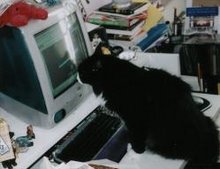

 Posts
Posts


